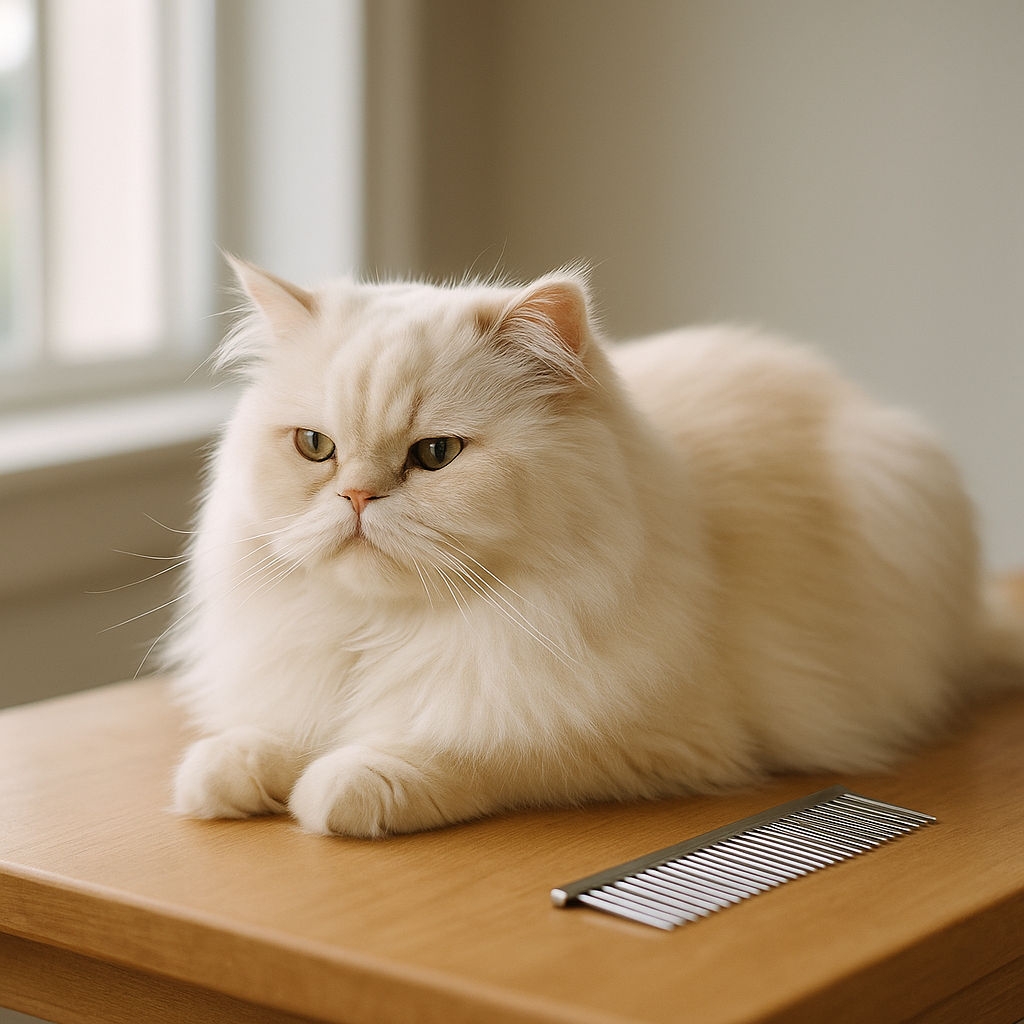
A Persian in a dry climate is manageable. A Persian in a damp one is a different proposition. The coat absorbs moisture from the air, slightly swells, and then when it dries it tends to bind at the roots. Skip one day in a humid week and you're not behind by one day — you're behind by three.
This guide is written for UK conditions specifically. Damp winters, mild summers, the kind of indoor humidity that comes from old housing stock without consistent central heating. If you're reading this from somewhere drier, some of this still applies — the section on tools especially — but your schedule will be more forgiving.
Climate note: Liverpool averages around 80% relative humidity in winter. At that level, a Persian coat that is not brushed daily will begin to tangle at the armpits, behind the ears, and at the collar area within 36 to 48 hours.
The Daily Routine (5–8 minutes)
The goal of daily grooming is not to make the coat perfect — it is to prevent the conditions that create mats. These are not the same thing. A rushed daily session with a wide-tooth metal comb is more useful than a careful weekly session with a slicker brush.
Start at the base of the neck and work downward. The areas that mat first, in order: armpits, groin, behind the ears, the collar line, base of the tail. These are where you spend 80% of your time. The back and flanks are less urgent.
- Wide-tooth metal comb (not plastic — plastic creates static and breaks the guard hair)
- Greyhound-style comb for face and ear framing
- Fine-tooth comb for finishing the coat surface
- Leave-in detangler spray — a light application before you start reduces friction significantly
If the comb encounters resistance, do not pull through. Part the coat above the resistance point and work into the tangle from below with the wide-tooth comb. Pulling through causes broken hair and, more importantly, tells the cat that grooming ends in discomfort.
Bathing Frequency in Humid Conditions
In a dry climate, a Persian may need bathing every four to six weeks. In a persistently damp climate, monthly bathing is more practical. The coat's natural oils build up faster when there is less evaporation — which sounds counterintuitive but is consistently what we see in the salon.
Use a cat-specific shampoo with a light moisturising formula. Avoid anything marketed as "volumising" — those products typically reduce the weight of the coat, which sounds good but in practice creates static and makes the coat more prone to tangling between sessions.
The critical step is drying. A damp Persian coat will begin to tangle within an hour of bathing if not dried properly. Use a low-heat hair dryer and work section by section, holding the comb ahead of the dryer. The coat should be fully dry — not just surface-dry — before the session ends. In Liverpool winters, this can take 30 to 40 minutes for a full-coated adult.
When to Call in a Professional
There are three situations where home grooming is not the right tool:
- Any mat that has reached the skin. Pulling on a skin-level mat causes pain and can break skin. A professional can remove it with scissors or a mat splitter without injury.
- A cat that has become genuinely aversive to grooming. This is not a training problem solvable in one session — it requires systematic desensitisation, which takes weeks.
- The coat has gone more than two weeks without brushing. The catch-up session is best done professionally to avoid making an already-stressed cat associate grooming with a long, unpleasant experience.
In Liverpool, full Persian grooming sessions (bath, dry, full comb-out, scissoring) run between £60 and £85 depending on coat condition. If you're maintaining daily at home, you should need professional work every eight to ten weeks rather than monthly.
Tools Worth Buying Once
The comb is the most important purchase. A Chris Christensen Buttercombs 7.5-inch or a Millers Forge wide-tooth comb will outlast several cheaper alternatives. Expect to pay £18–£30. The plastic combs that come in pet starter kits are not suitable for adult Persian coats.
A detangling spray makes a real difference. We use Chris Christensen Ice on Ice diluted to about 30% in a spray bottle — it reduces session friction without leaving any residue. Cheaper alternatives work but require a heavier application to get the same result.
You do not need a slicker brush for a Persian's main coat. The slicker is useful for finishing short-haired cats but tends to fray the ends of Persian guard hairs over time. Stick to metal combs.